INDUSTRIAL BELT FURNACES

Industrial Belt Furnaces

XMZ designs and supplies industrial belt furnaces for continuous thermal processing from precision microelectronics to large-scale industrial production. Our furnace platforms support air and controlled-atmosphere firing, heat treatment, drying, reflow, brazing and other continuous processes, with each system configured around the product, temperature profile, atmosphere, production rate and facility requirements.

Rather than limiting customers to fixed furnace sizes and standard configurations, XMZ combines proven furnace platforms with application-specific engineering. Heating zones, belt width, working height, furnace length, heating method, atmosphere control, exhaust, cooling, conveyor system and controls can be configured for the process.

Built on Extensive Furnace Experience

Discuss Your Furnace Application Explore Belt Furnace Applications

XMZ industrial belt furnace for continuous thermal processing

Built on a manufacturing foundation with more than 6,500 furnaces and kilns delivered worldwide. For an industrial belt furnace manufacturer, high production volume helps refine practical engineering details that matter in real-world, day-to-day operation, including temperature and atmosphere control, conveyor reliability and long-term maintenance.

XMZ combines this manufacturing experience with application engineering, custom furnace configuration, project coordination, commissioning and service for customers in North America and worldwide.

XMZ Belt Furnace Systems

XMZ belt furnaces are organized by process environment and thermal application rather than by a fixed furnace size or heating method. Each series provides a proven engineering platform that can be configured for the required temperature profile, production capacity and product geometry.

Start with the Process Requirement

The XMZ belt furnace series are differentiated primarily by process environment and thermal objective. A customer's process requirement is therefore the fastest way to identify the appropriate starting platform.

XMZ Belt Furnace Systems
Process RequirementTypical XMZ Platform
Air firing, sintering or heat treatmentHSK Series
Nitrogen, hydrogen or other controlled-atmosphere processingHSA Series
Drying, curing or low-temperature continuous heatingHSG Series
Electronic reflow solderingHSF Series
High-speed solar cell firingHSH Series

The selected series is a starting architecture rather than a fixed machine. Final configuration is developed around the product, temperature profile, throughput, atmosphere, loading and facility requirements.

HSK Series fast fire furnace for air-atmosphere firing

HSK Series Fast Fire Furnaces

Air-Atmosphere Firing and High-Temperature Processing

The HSK Series is XMZ’s fast fire belt furnace platform for continuous high-temperature processing in air. It is widely used for thick film circuits, precision resistors, heaters, sensors, electronic components, ceramics, glass and glaze firing, powder sintering, and other processes requiring controlled temperature profiles and repeatable continuous production.

HSK furnaces can be customized with different heating technologies, temperature zones, belt widths, working heights, exhaust systems, and cooling sections to meet specific process requirements.

Operating temperature
200–1,050°C
Process atmosphere
Air
Typical applications
Thick Film Firing • Precision Resistor Firing • Heater & Sensor Firing • Electronic Components • Ceramic Firing • Glass & Glaze Firing • Powder Sintering
HSA Series controlled-atmosphere belt furnace

HSA Series Controlled-Atmosphere Belt Furnaces

Nitrogen, Hydrogen, and Controlled-Atmosphere Processing

The HSA Series is XMZ’s controlled-atmosphere belt furnace platform for continuous thermal processes requiring precise atmosphere management. Systems can be configured for nitrogen, hydrogen, nitrogen/hydrogen mixtures, and other process gases, with gas distribution, atmosphere isolation, exhaust, oxygen monitoring, and dew point control engineered around the application.

HSA furnaces are widely used for glass-to-metal sealing, brazing, DBC processing, annealing, reduction, and other oxidation-sensitive thermal processes. Furnace length, heating zones, atmosphere distribution, conveyor systems, and cooling sections can be customized to meet specific process requirements.

Operating temperature
200–1,150°C
Process atmosphere
N₂ • H₂ • N₂/H₂ Mixtures • Other Controlled Process Atmospheres
Typical applications
Glass-to-Metal Sealing (GTMS) • Brazing • DBC Processing • Annealing • Reduction • Controlled-Atmosphere Sintering
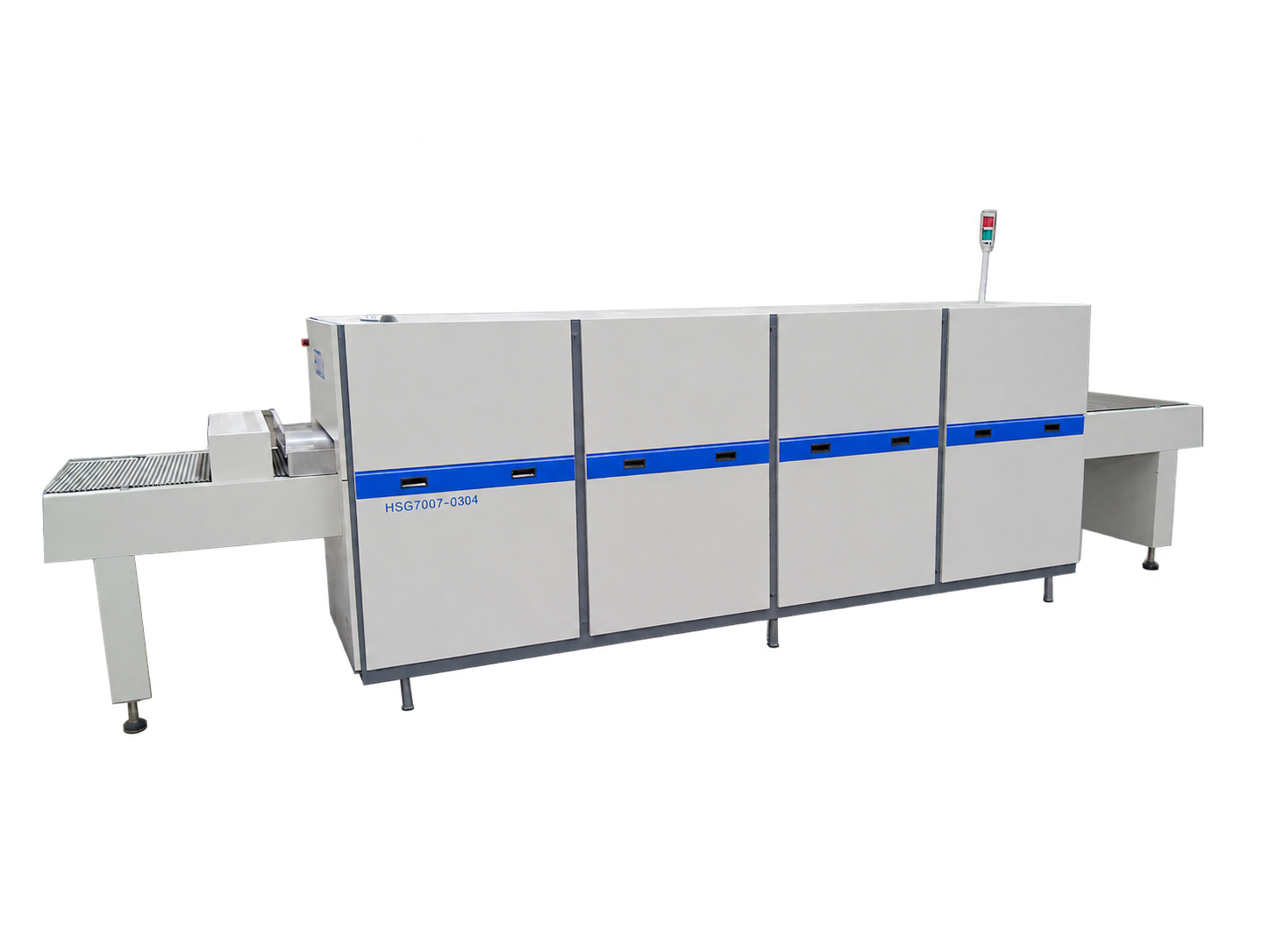
HSG Series belt drying furnace

HSG Series Belt Drying Furnaces

Continuous Drying and Low-Temperature Thermal Processing

The HSG Series is XMZ’s continuous belt drying furnace platform for drying, curing, and other low-temperature thermal processes. Furnaces can incorporate infrared or other suitable heating technologies, independently controlled temperature zones, adjustable conveyor speeds, and application-specific ventilation and exhaust systems.

HSG furnaces are widely used for thick film paste drying, electronic materials, coatings, and other processes requiring controlled moisture or solvent removal. Heating length, belt width, working height, airflow, and conveyor configuration can be customized for different products and production requirements.

Operating temperature
100–350°C
Process atmosphere
Air • Other Atmospheres by Custom Configuration
Typical applications
Thick Film Drying • Electronic Material Drying • Paste Drying • Coating Drying • Curing
HSF Series reflow oven

HSF Series Reflow Ovens

Continuous Reflow Soldering for Electronic Assembly

The HSF Series is XMZ’s continuous conveyor reflow oven platform for electronic assembly and soldering applications. Systems can be configured for air or nitrogen processing, using infrared and forced-convection heating with independently controlled temperature zones and adjustable conveyor speeds.

HSF furnaces support controlled solder reflow profiles, stable conveyor transport, and forced cooling for continuous production. Inline vacuum reflow configurations are also available for applications requiring vacuum processing during the soldering cycle.

Operating temperature
100–350°C
Process atmosphere
Air • N₂ • Vacuum Reflow Option
Typical applications
SMT Reflow Soldering • PCB Assembly • Electronic Component Soldering • Vacuum Reflow Soldering
HSH Series solar cell firing furnace

HSH Series Solar Cell Firing Furnaces

High-Speed Firing for Photovoltaic and Glass Products

The HSH Series is XMZ’s high-speed firing furnace platform for photovoltaic and glass-product manufacturing. These furnaces are designed for processes requiring rapid heating, short firing cycles, controlled cooling, and stable high-speed conveyor transport.

HSH systems can incorporate infrared lamp heating, multiple temperature-control zones, and application-specific cooling arrangements. Furnace length, conveyor speed, heating configuration, and product handling can be customized for different production requirements.

Operating temperature
Up to 1,150°C
Process atmosphere
Air
Typical applications
Solar Cell Contact Firing • Photovoltaic Metallization • Glass Product Firing • High-Speed Thermal Processing

Custom Belt Furnaces Engineered Around Your Process

A custom belt furnace should begin with the process rather than a standard furnace model. XMZ reviews the product, thermal profile, production rate, atmosphere, loading arrangement and facility requirements before defining the furnace configuration.

Six Process Inputs That Define the Furnace Configuration

XMZ starts with the application requirements and translates the customer’s process into a furnace configuration. The following six inputs provide the starting point. If a belt furnace is not the right fit, we can recommend a more suitable furnace architecture for the process.

Custom Belt Furnaces Engineered Around Your Process
Process InputWhat XMZ Confirms
Product & LoadingProduct size, weight, material, carrier or fixture, and loading arrangement
Temperature ProfilePeak temperature, heating rate, dwell time, cooling requirement and product exit temperature
AtmosphereAir or process gas, oxygen requirement, dew point or humidity, gas distribution and atmosphere isolation
ProductionParts per hour, loading density, conveyor speed, residence time and production schedule
Process EnvironmentOrganic burnout, exhaust load, contamination concerns, cooling and other process-specific conditions
Facility & IntegrationAvailable footprint, utilities, entrance/exit requirements, loading/unloading and upstream/downstream equipment

Depending on the application, the system can be customized for:

  • Furnace and heating-zone length
  • Belt width and working height
  • Temperature range and thermal profile
  • Heating technology and heater arrangement
  • Conveyor speed and product loading
  • Air or controlled process atmosphere
  • Gas distribution and atmosphere isolation
  • Exhaust and organic removal
  • Heating and cooling rates
  • Cooling-section design
  • Controls and temperature profiling
  • Loading, unloading and production-line integration

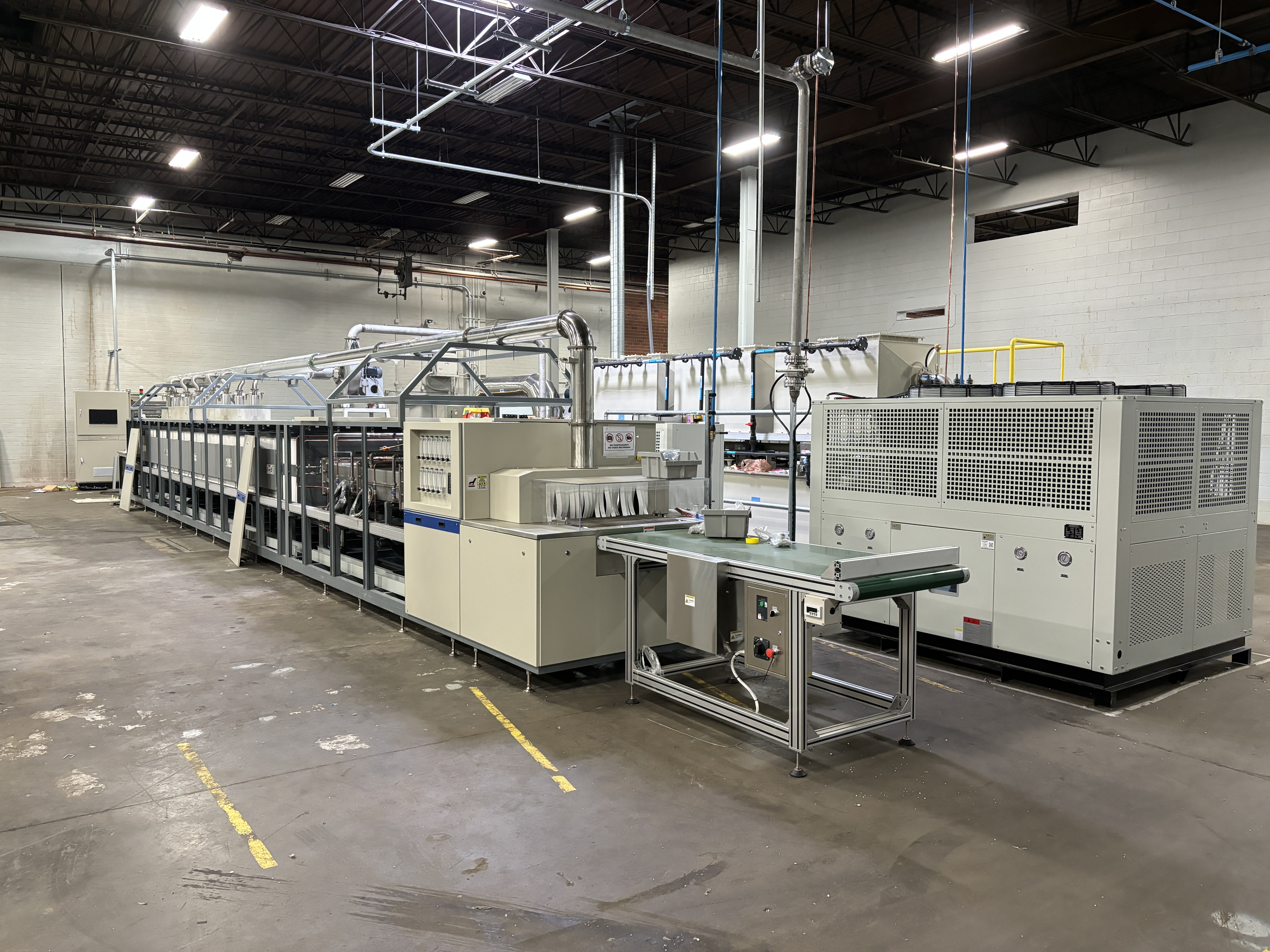
XMZ has experience with furnace configurations ranging from compact precision-processing systems to large custom equipment with belt widths 2+ meters and working openings approaching 1+ meter in application-specific designs.

Large custom industrial belt furnace engineered for high-volume production

Precision Temperature and Process Control

Belt furnace performance depends on more than the maximum operating temperature. Product results are influenced by the temperature profile, cross-belt uniformity, residence time, conveyor stability, loading conditions, atmosphere, exhaust and cooling behavior.

XMZ has extensive experience with precision electronic and microelectronic thermal processes where these variables must remain stable throughout continuous production. Multi-zone temperature control, application-specific heater arrangements, airflow design and controlled conveyor speed allow the furnace to be engineered around the required product profile rather than a single furnace setpoint.

For controlled-atmosphere applications, furnace chamber design, gas distribution, entrance and exit isolation, exhaust, oxygen level and dew point can also become part of the process design.

From Process Requirements to a Production Furnace

01 — Process Review

XMZ begins with the product, application, product dimensions and loading, production capacity, required temperature profile, atmosphere and facility conditions.

02 — Engineering and Furnace Configuration

The engineering team develops the furnace architecture, heating zones, conveyor system, atmosphere and exhaust design, cooling system and controls around the process requirements. Simulation and engineering analysis are used during furnace development where appropriate.

03 — Manufacturing and FAT

The furnace is assembled, commissioned and tested before shipment. Factory Acceptance Testing verifies system operation and agreed performance requirements before the equipment leaves the manufacturing facility.

04 — Installation, Commissioning and Support

XMZ supports equipment installation, start-up, process commissioning, troubleshooting, spare parts and long-term furnace service, with direct support in North America and support for projects worldwide.

Belt Furnace Applications

Belt Furnace Applications
Application AreaRepresentative Processes
Microelectronics & Electronic ComponentsThick Film Firing • LTCC Post-Firing • Precision Resistors • Heaters & Sensors • Electronic Packaging
Brazing & JoiningBrazing • DBC • Hermetic sealing • Glass-to-metal sealing
Metals & Heat TreatmentAnnealing • Reduction • Controlled-atmosphere heat treatment
Advanced Ceramics, Glass & MaterialsCeramic Firing & Sintering • Glass & Glaze Firing • Powder Sintering
Battery & Energy MaterialsContinuous thermal processing for battery components and other energy-material applications
PhotovoltaicsSolar cell drying • Contact paste firing • Thin-film and specialty photovoltaic thermal processes

Explore the XMZ Furnace Applications page for application-specific process information and recommended furnace platforms.

Custom Engineering with a Competitive Manufacturing Cost

XMZ combines application-specific engineering with established, large-scale manufacturing capabilities, allowing highly customized furnace systems to remain cost competitive. Customers can configure the furnace around their process requirements without being limited to fixed catalog models or the cost structure typically associated with low-volume custom equipment.

Representative Custom Belt Furnace Experience

Large-Format Continuous Furnace

XMZ has developed large custom belt furnace systems for energy-related manufacturing where furnace dimensions, production capacity and temperature uniformity across a large working volume must be considered together. Application-specific systems have been built with conveyor widths approaching 2 meters and working openings approaching 1 meter.

High-Speed Controlled-Atmosphere Processing

For another specialized industrial process, the furnace required a wide conveyor operating at unusually high belt speed while rapidly heating the product under a controlled atmosphere. The resulting system required the heating architecture, atmosphere containment, conveyor and furnace chamber to be engineered together rather than treated as independent components.

High-speed large-format continuous furnace

When a Belt Furnace Is a Good Fit

Mesh belt furnaces are generally the more economical continuous furnace solution. Belt furnaces are particularly well suited to processes that benefit from continuous product flow, repeatable thermal profiles, controlled residence time and consistent transport through sequential heating and cooling sections.

The best furnace architecture still depends on the product. Very heavy loads, higher-temperature requirements, different product-support methods, more stringent cleanliness requirements, or specialized batch and vacuum cycles may point to a pusher furnace, roller hearth kiln, batch furnace or another thermal-processing system.

Continuous Belt Furnace Engineering

A continuous belt furnace transports products through sequential heating, process and cooling sections at a controlled conveyor speed. Belt speed and zone length determine residence time, while the arrangement and temperature of each zone establish the required thermal profile.

This architecture is well suited to processes requiring repeatable thermal cycles, continuous production and consistent product handling. Depending on the application, XMZ systems can incorporate multiple heating zones, controlled atmospheres, exhaust systems, extended dwell sections, rapid or controlled cooling and integrated upstream or downstream equipment.

  1. Loading
  2. Preheat
  3. Heating / Burnout
  4. Peak / Dwell
  5. Controlled Cooling
  6. Unloading

Integrated Continuous Production Systems

A belt furnace does not always operate as a stand-alone machine. XMZ can evaluate loading, pretreatment or drying, firing or heat treatment, cooling, unloading, conveying and process controls as parts of one continuous production system.

For applications such as thick film manufacturing, multiple thermal and handling stages can be engineered around continuous product flow rather than treated as unrelated equipment. The furnace interface, conveyor arrangement and controls can also be coordinated with upstream and downstream production equipment.

Frequently Asked Questions About Belt Furnaces

What is an industrial belt furnace?

An industrial belt furnace is a continuous thermal processing system that transports products through controlled heating and cooling sections on a conveyor belt. Belt speed and temperature-zone settings are used to establish the required residence time and product temperature profile.

What are the advantages of a continuous belt furnace over a batch or box furnace?

A continuous belt furnace can achieve much faster product heating rates because parts move through zones with progressively higher temperatures rather than waiting for the entire furnace chamber to heat up. The heating rate of a batch furnace can be limited by the allowable temperature ramp of its refractory and structural materials, while belt speed allows parts to move rapidly between different thermal environments. Belt furnaces also typically provide better product temperature uniformity and part-to-part consistency, along with continuous production and higher throughput.

What is the difference between an air and controlled-atmosphere belt furnace?

Air furnaces process products under normal oxidizing conditions, while controlled-atmosphere furnaces manage gases such as nitrogen or hydrogen and may also control oxygen concentration, dew point and furnace pressure. XMZ typically uses the HSK platform for air processes and the HSA platform for controlled-atmosphere applications.

What processes can be performed in a belt furnace?

Belt furnaces are used for firing, sintering, heat treatment, brazing, annealing, drying, curing, reflow soldering and other continuous thermal processes. The appropriate furnace configuration depends on the product, temperature profile, atmosphere, loading and production requirements.

What information does XMZ need to design a custom belt furnace?

XMZ starts with the product and application, product dimensions and weight, production rate, required temperature profile, process atmosphere, loading arrangement, cooling requirements, available utilities and facility space. Based on these requirements, the furnace can be customized for heating-zone length, belt width, working height, conveyor speed, atmosphere, exhaust, cooling, controls and production-line integration.

How do I determine the required furnace length and belt speed?

Furnace length and belt speed are determined together from the required product temperature profile, production capacity and loading arrangement. XMZ reviews these parameters before developing the furnace configuration.

Can a conveyor belt furnace be integrated into an existing production line?

Yes. Loading and unloading arrangements, conveyor height and speed, controls, upstream and downstream equipment can be considered during furnace design. XMZ can also support automation and process integration for selected production steps where required.

What if my process is not suitable for a belt furnace?

XMZ also supplies other industrial furnace architectures, including pusher furnaces, roller hearth kilns and batch systems. Furnace selection should be based on the thermal process, product geometry and weight, atmosphere, production capacity and material-handling requirements.

Discuss Your Belt Furnace Application

Every furnace project starts with the process.

Send XMZ your product dimensions, production rate, required temperature profile, atmosphere and available process information. Our engineering team can review the application and recommend an appropriate furnace platform and configuration.

Request a Furnace Recommendation Contact XMZ Technologies